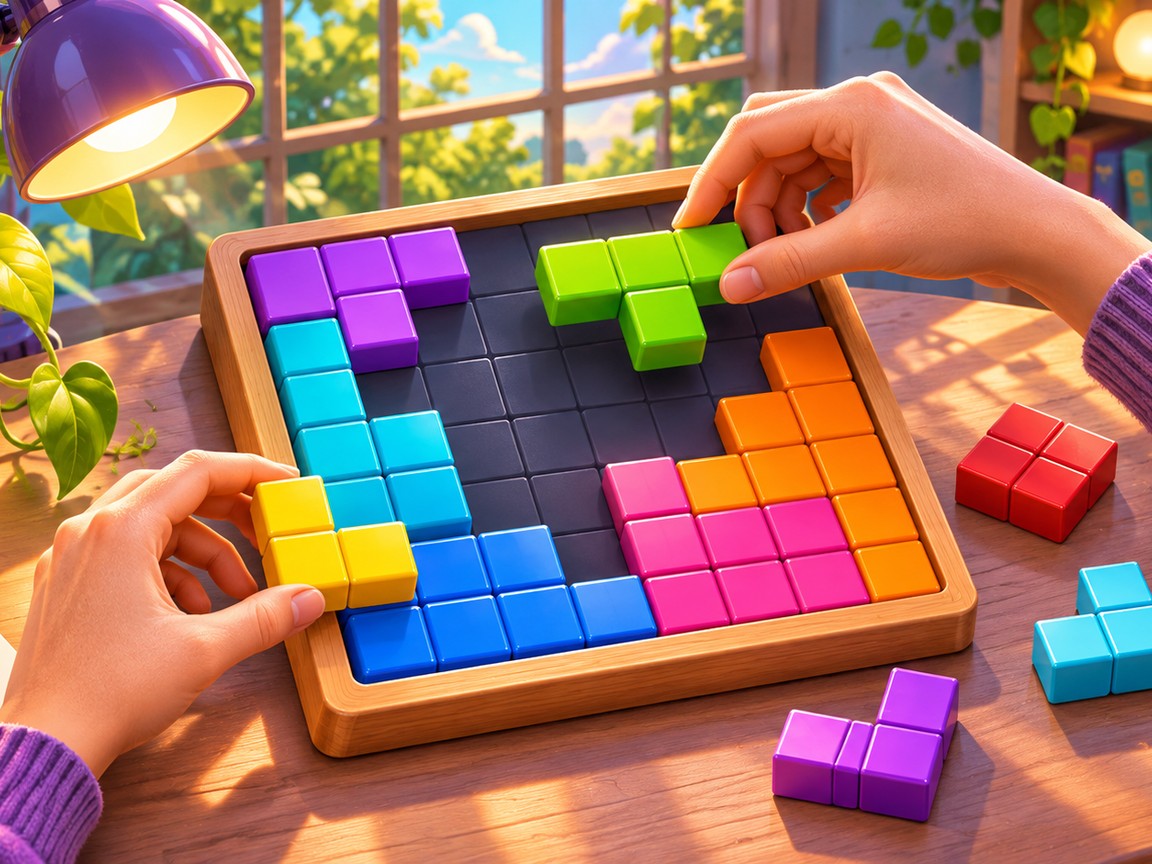
About Blockora

Blockora turns colourful blocks into a logic puzzle. Place each piece carefully and discover the shapes and combinations you can make. The game starts with a straightforward action. Put a piece on the board where its outline has room, then look at what has changed before taking another turn. There is a small discovery in the way two simple shapes can become something you did not picture at first. The challenge grows as more arrangements become possible and useful spaces become harder to spot.

Hands arranging colourful pieces on a block puzzle board

Where the idea starts

A board full of colourful pieces can look simple at first. The interesting part is working out which shapes fit together and what space each move leaves behind. Think of an empty stretch near the edge. It might be tempting to fill it because the space is easy to see, yet that same stretch could be the best place for a longer shape later. A compact piece may be equally useful in a smaller patch elsewhere on the board. Comparing those two choices gives you a way to make progress even before you place anything. Look at what each move offers now, then what it would leave for the following piece. As the arrangement grows, the outline of the empty area can tell you as much as the colourful pattern you have already made.

Look closely at the edges, try a different approach, and watch the picture change. Even a small block can make a big difference to the next move. Explore the shapes. A useful way to explore a board is to trace the openings with your eyes. Follow one edge from end to end and see where it turns, gets wider, or meets another piece. Next, compare that edge with the outlines you have available. You may notice that a piece you were saving for one corner would sit more neatly along the opposite side. Small adjustments matter because they change the shape of the space that remains. When you find a fresh approach, take a second to see which detail led you there.

What makes it fun

Spot a fit

Compare the edges of a piece with the empty spaces on the board. A quick look can reveal a fit you missed. Try breaking a large outline into simple parts. A long side can be a useful starting point, followed by a short arm or a small step. Check those parts in the same order on the board. It is easy to recognise a familiar turn and overlook that the space beyond it is too narrow. A careful second look helps catch that difference before you place the piece. Once you find a complete match, compare it with any other opening that has the same general outline and decide which gives you more room to work.

Try a new angle

Think about where a shape might go before placing it. Moving your attention to another part of the board often helps. If you have been watching the middle of the field, move your eyes to one of the outer edges. The border makes a useful reference line and can turn an awkward-looking opening into a much simpler outline. Give yourself permission to consider a different starting point even when your first idea looked promising. An opportunity to fill another area may be easier to see once you stop trying to force that particular move.

Leave room

A placement that looks good now can close off space you need later. Keep an eye on what your next piece might need. Before placing a piece, imagine the shape of the open area after it lands. If the move cuts a wide patch into two narrow parts, consider which pieces might still use them. If it closes a single isolated corner, check whether that makes the rest of the field simpler. A good placement can be tidy, flexible, or both. The balance depends on what you see on the board.

Enjoy the reveal

When the pieces finally fit, take a moment to enjoy the colourful shape you made and see what you could try next. Look at the finished combination as a whole. Notice which piece gave the arrangement its outline, which one filled an awkward space, and which choices left you room to continue. You may find that the move you made near the start had an effect you only recognised at the end. Keep that idea in mind for another puzzle. The next board gives you a chance to build on what worked, adapt it to a different opening, or simply enjoy seeing a fresh pattern come together.

Four things to notice

1

Notice how each colourful piece changes the board. Look at the occupied cells and the empty cells as two parts of the same pattern.

2

Compare open spaces before choosing where a piece goes. Give two empty spaces a quick comparison before committing a piece.

3

Take one move at a time and see what opens up. After an important placement, pause and read the new outline. Decisions are easier when you work with the board as it looks now and set aside assumptions you made before the last move.

4

Look for surprising ways to combine familiar shapes. Follow the points where familiar pieces touch. An angled block and a compact block can create a shape you recognise immediately, even if their individual outlines looked quite different.

Contact address

The Vision Building, 20 Greenmarket, Dundee DD1 4QB, United Kingdom

For ways to get in touch, see the contact page. Puzzle illustrations are collected in the Gallery. If you have a question about the game or want to share an observation, the links on this site help you find a place to start. The gallery is useful when a picture explains your idea more clearly than a shape name. The contact page is the place to go for email details. If you write about a puzzle, a description of the open space or the move you tried can help show what you mean.

Get to know the pieces

See how straight, square, corner, and step shapes fit into different spaces. The shapes page gives you a closer look at their individual outlines. Start with the longest side of the piece, then see whether its corners or steps narrow down the spaces that could hold it. This is especially useful on a busy field, where visual details can be easy to miss.

Visit the shapes page